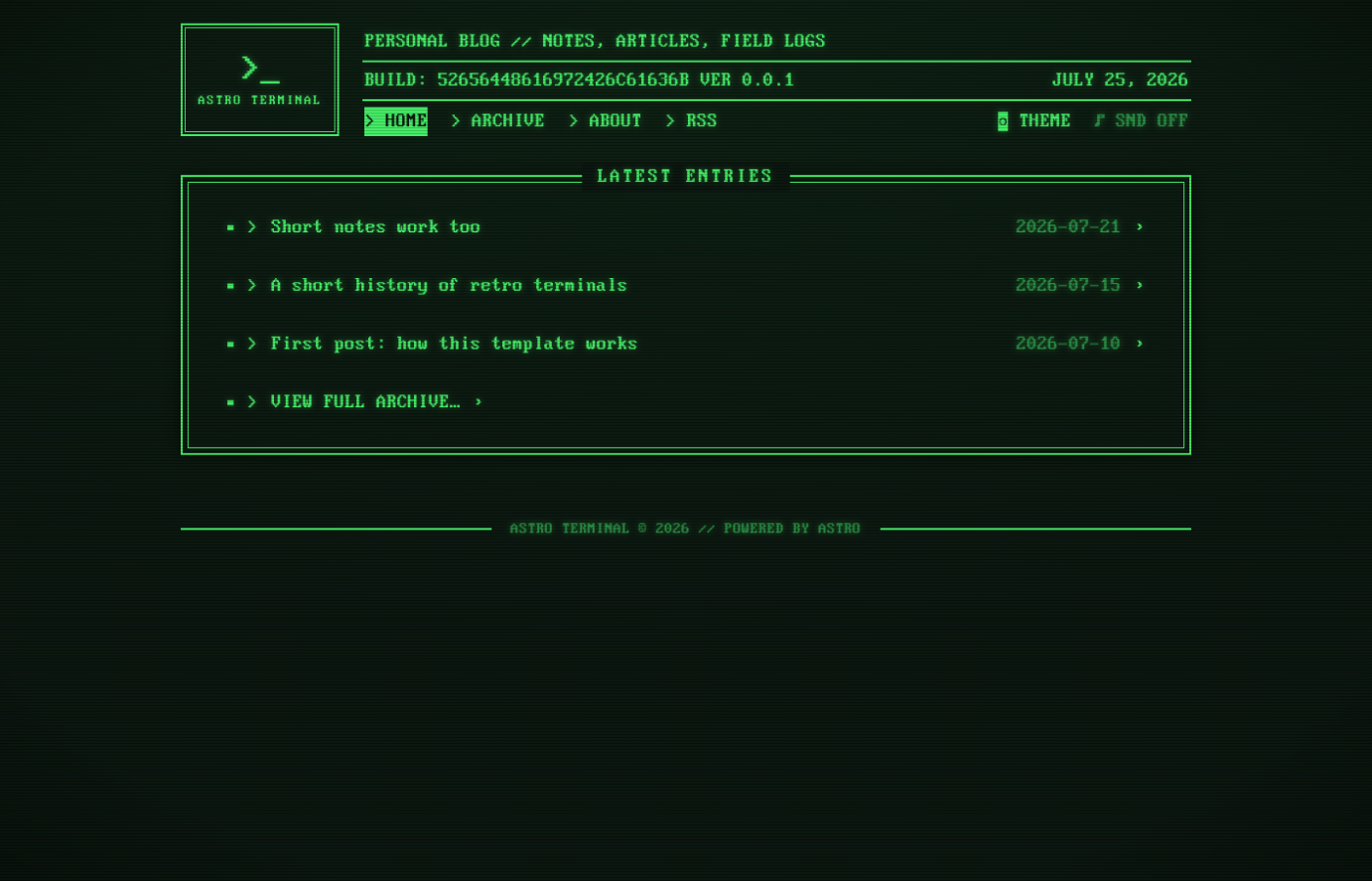
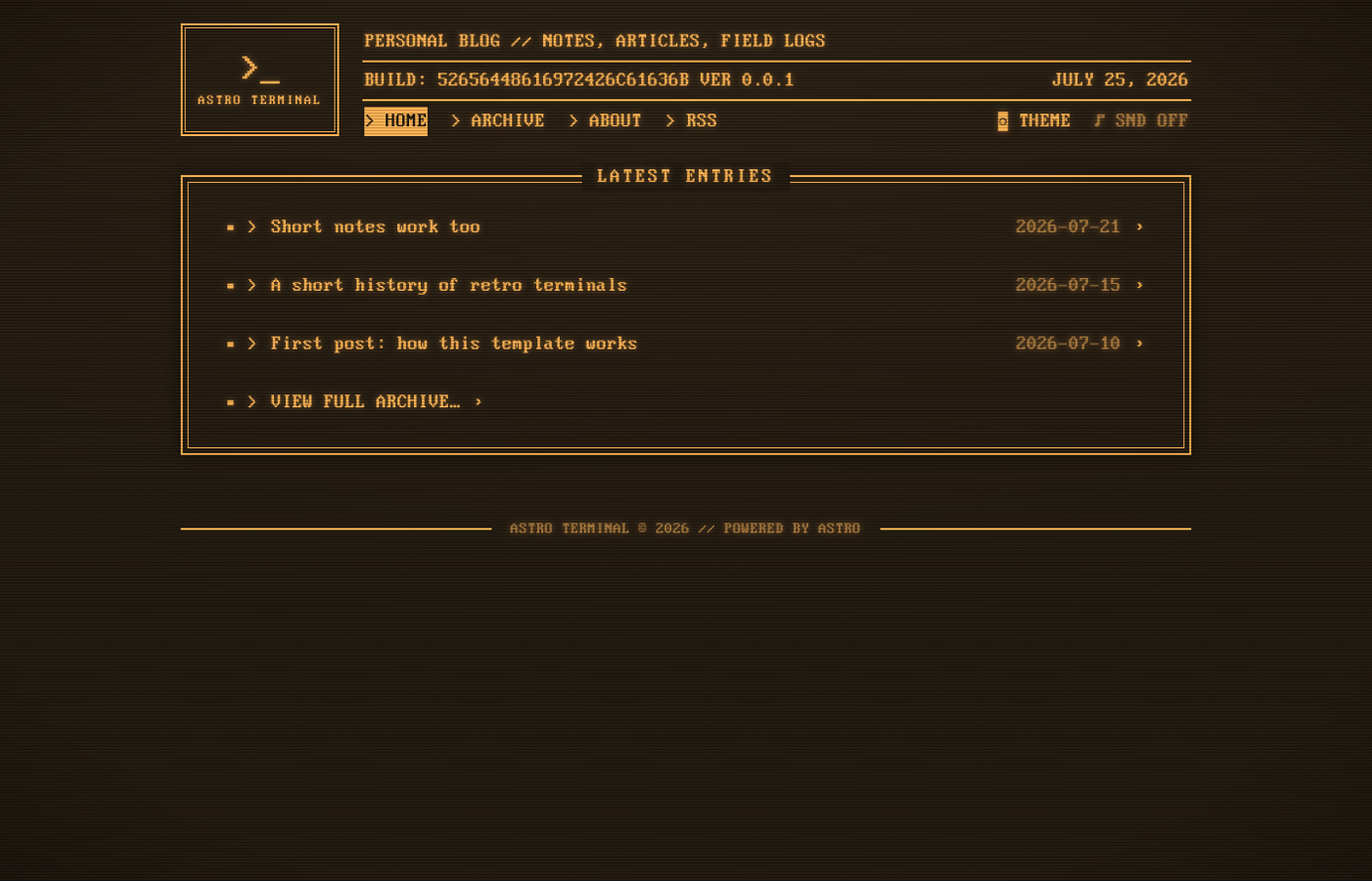

An Astro template styled after 1980s CRT terminals: an amber (or green) phosphor CRT screen with scanlines, glow, and the authentic IBM VGA 8×16 font (with Cyrillic support).
Two Visual Themes
Choose between two retro terminal-inspired themes: Amber (the default) and Green Phosphor. Switch between them using the THEME button or the T keyboard shortcut. Your choice is automatically remembered.
CRT Effects
The interface includes several CRT-inspired visual effects, including scanlines, a vignette, a moving scan bar, and subtle screen flicker. These effects are automatically disabled for users who have enabled reduced motion in their system settings.
Power-On Boot Sequence
On the first visit during a session, the site displays a mainframe-style boot sequence with a POST log. The sequence can be dismissed by pressing any key or clicking anywhere on the screen. Once dismissed, it will not appear again during the current session.
The fictional system vendor, system name, and model can be customized in the site's configuration.
Hacking 404 Page
The 404 page is more than just a standard "file not found" message. It features a password-guessing minigame inspired by classic hacking interfaces, including hexadecimal addresses, hidden words, attempts, and a likeness system.
The actual site navigation remains available at all times, so the minigame is an optional Easter egg rather than a dead end.
Optional Private Mode
The hacking minigame can also be enabled as a gate for the entire website. When enabled, visitors must solve the challenge at the beginning of each new session. Once unlocked, access remains open for the rest of that session.
Content-Collection Blog
The blog is powered by Markdown-based content collections. Posts can be written as simple Markdown files, while Astro automatically optimizes hero images and in-post images.
Images are also tinted to match the currently selected visual theme.
Archive, Tags, RSS, and About Page
The site includes:
- An archive organized by year
- Tag-based navigation
- RSS support
- An About page
Terminal Sound Effects
The interface includes optional terminal-style sound effects. Hovering over menu items, links, and minigame cells produces short blips, while selecting, failing, and successfully unlocking content each have their own unique sounds.
Sound can be enabled or disabled using the SND button, and the preference is remembered.
The sounds are designed to resemble audio coming from an old computer speaker rather than clean modern UI notifications. Most sounds are synthesized using the Web Audio API with low square-wave tones and filtering. The access-denied sound uses a CC0 sample from Kenney's Interface Sounds pack.
Custom sound files can also be added if desired, provided you have the necessary rights to use them.
Keyboard Shortcuts
- H — Home
- A — Archive
- T — Toggle theme
The shortcuts also work when using a Russian keyboard layout.
Private Mode
Private Mode can be enabled to place the hacking minigame in front of the entire website.
When enabled, visitors must solve the challenge at the beginning of each new session. After successfully cracking the password, access remains unlocked for the rest of the session, and navigating between pages will no longer display the gate.
Starting a new session or opening the site in a new tab will require the challenge to be completed again.
If all attempts are used, a [ RETRY ] button generates a new challenge board.
Important Note
Private Mode is a cosmetic, client-side lock designed for the experience and atmosphere of the site rather than real security.
Because the site is static, its content is still present in the generated HTML and can be accessed through methods such as viewing the page source, using command-line tools, or disabling JavaScript.
For genuine privacy and access control, server-side authentication is required, such as Astro running in SSR mode with middleware and session-based authentication.