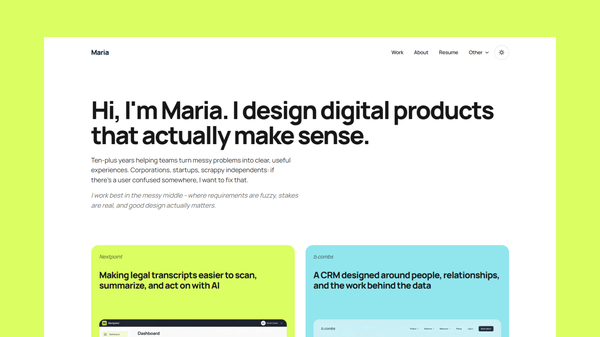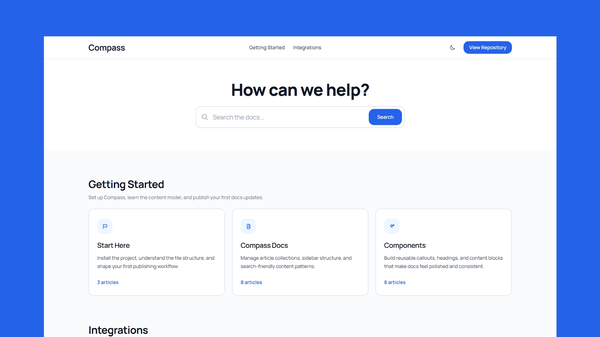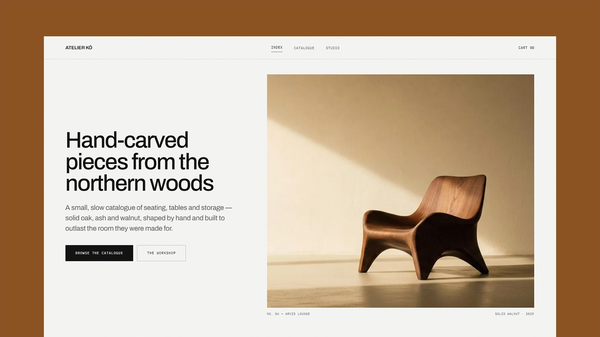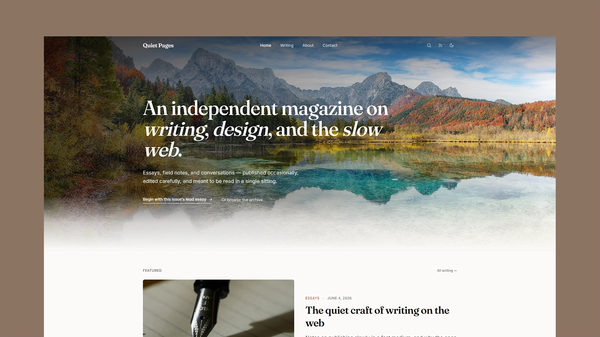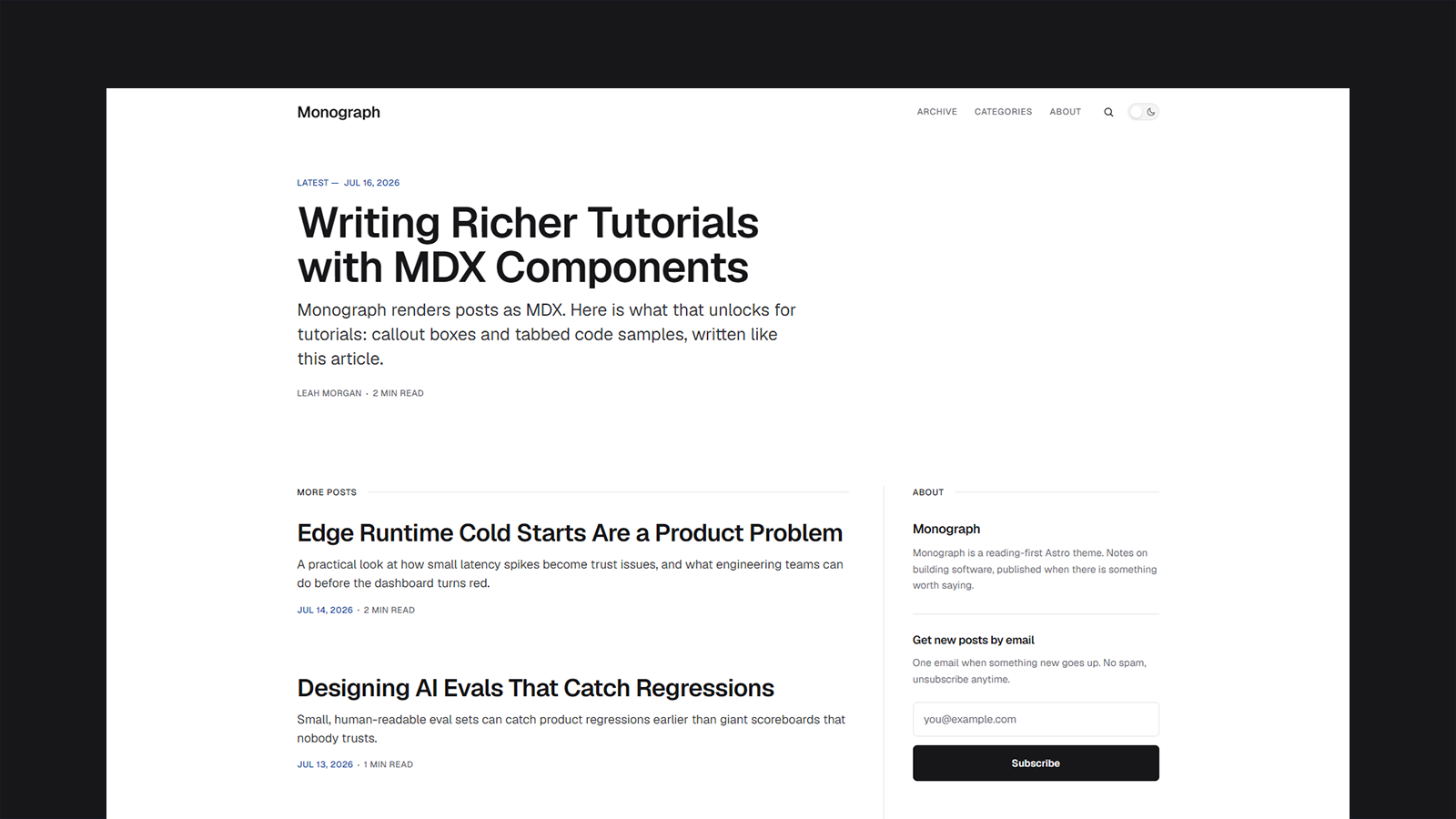

Monograph is built for writing that expects to be read rather than skimmed. The feed is a reading list instead of a card grid, so titles and excerpts carry the page while cover images stay on the post itself. It pairs a monochrome palette and a single restrained accent with one centred reading column, a keyboard-driven search palette, a light/dark reading mode applied before first paint, Markdown and MDX content collections, computed read time, strong SEO defaults, accessible navigation, provider-neutral forms, and mostly static Astro output.
It is ideal for personal blogs, engineering notebooks, developer documentation-style writing, researchers, newsletter authors, and anyone who wants a quiet, fast, typography-led publication without a magazine's worth of layout to maintain.
Features
- Text-first homepage with a large latest post, a whitespace-separated feed, and a sticky sidebar holding an about blurb, subscribe form, featured posts, and categories with post counts
- Markdown and MDX posts powered by Astro content collections
- Validated frontmatter for titles, excerpts, categories, dates, updates, authors, cover images, credits, featured posts, and drafts
- Individual post pages with a single 720px reading column, author and category byline, share and copy-link actions, previous/next navigation, and related posts
- Categories as the only taxonomy, with a category index carrying descriptions and counts plus a generated archive per category
- Author directory with individual author archives generated from post frontmatter
- Paginated archive, dedicated search page, and About, Contact, Privacy, RSS, robots.txt, sitemap, and custom 404 pages
- Built-in client-side search with a keyboard-friendly command palette tiered ranking, and a dedicated results page — no search service and no database
- System-aware light and dark reading modes behind a header toggle switch, applied before first paint with the reader's choice remembered
- Read time calculated from the post body at build time, with nothing to maintain by hand
- Reusable MDX content components — callouts and tabbed code samples — available in any post with no imports
- Dual light and dark syntax-highlighted code blocks with a copy button on every block
- Interactive provider-neutral newsletter and contact-form previews that submit nowhere until an endpoint is configured
- Centralized settings for site details, navigation, categories, social links, forms, and metadata
- Canonical URLs, Open Graph metadata, Twitter/X cards, RSS, sitemap generation, robots.txt, and JSON-LD structured data
- Responsive Astro images with optimized formats and height-capped feature images
- Self-hosted Geist and Geist Mono fonts with no external font requests
- Local interface and social icons with no external icon requests
- Sticky header that hides while scrolling down and returns on the way up
- Restrained hover motion on a single easing curve, with full reduced-motion support
- Accessible skip link, semantic landmarks, labelled controls, visible focus states, and keyboard-friendly navigation
- Full-screen mobile navigation with focus containment
- Tailwind CSS 4 design tokens in cascade layers for colors, spacing, typography, radii, and motion
- Mostly static Astro output with minimal JavaScript and no client framework runtime
- MIT licensed and free for personal and commercial projects
Best Used For
- Personal blogs and writing journals
- Engineering and developer notebooks
- Technical essays and deep dives
- Product and engineering team blogs
- Newsletter authors publishing an archive
- Researchers and academic writing
- Changelog-adjacent release notes
- Open-source project blogs
- Consultant and freelancer writing portfolios
- Note-taking and digital-garden publications
- Design and typography commentary
- Long-form opinion and analysis writing
- Minimalist portfolio companion blogs
- Documentation-style tutorial collections
- Publications that need strong SEO, accessible design, and fast static performance