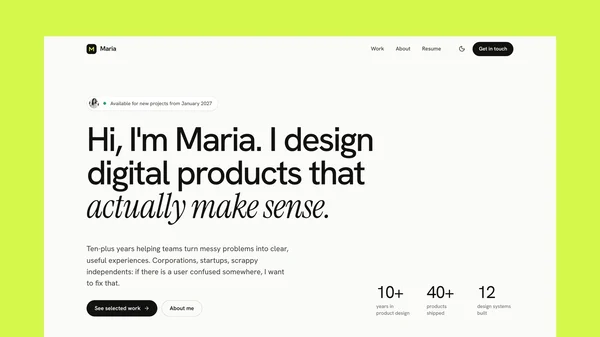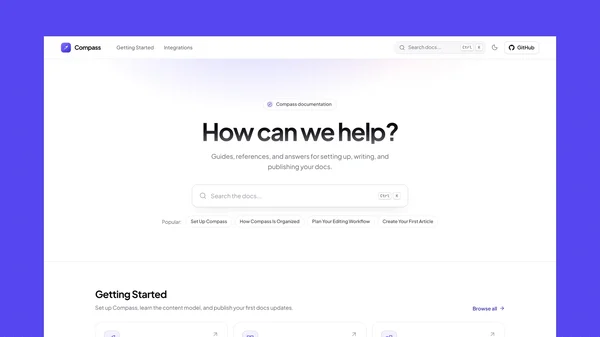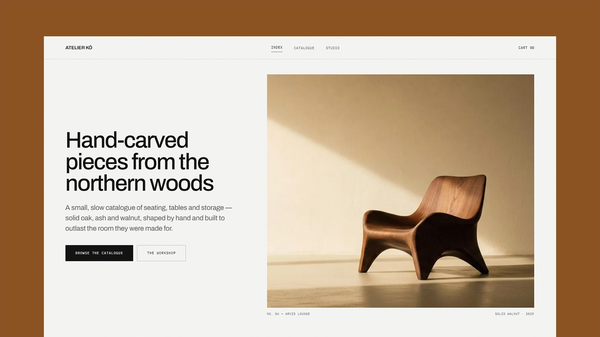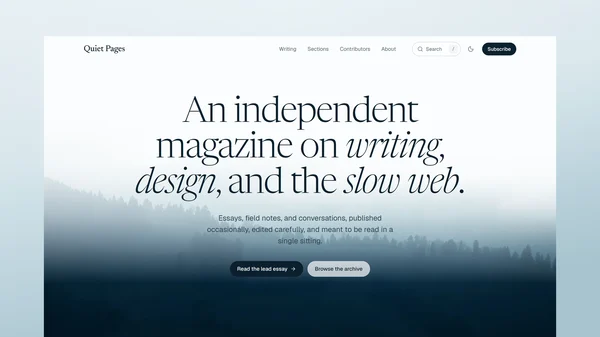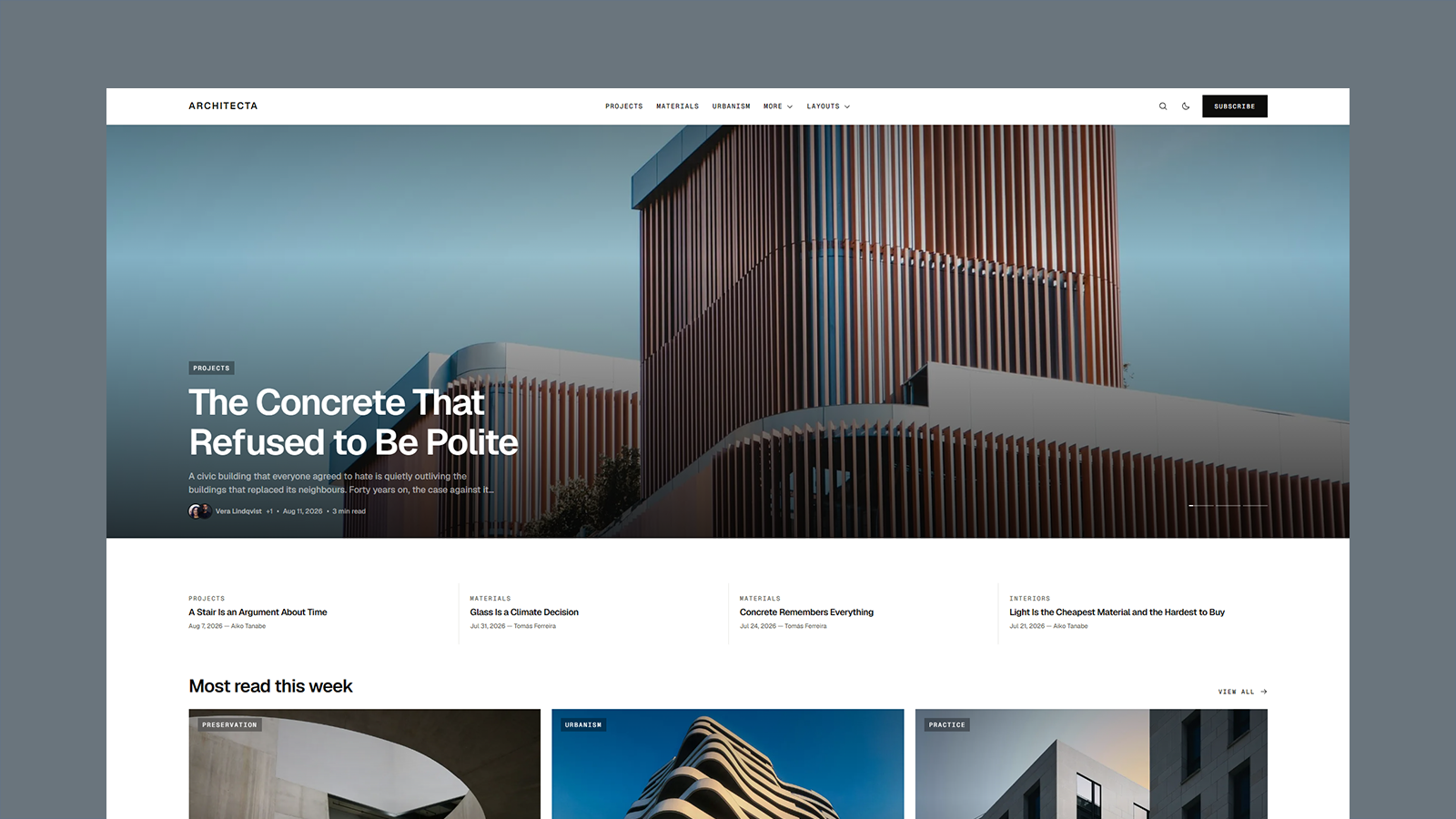

Architecta is built for publications that read the way good drawings look: black, white, and precisely set. There is no color anywhere in the theme — links, focus, and active states work through weight and contrast on a single graphite ramp, with square zero-radius geometry, a Geist variable sans for reading, and mono capitals for eyebrows, indices, and metadata. The homepage composes like an editorial issue rather than a feed: a lead hero with pinned featured stories, an "in this issue" digest row, a most-read rail, a self-selecting long read, a rotating section spotlight, a latest grid flanked by ranked most-read and editor's-picks indices, an editor statement band, section tiles, and desk rows — each story spent exactly once so no headline repeats down the page.
It is ideal for architecture magazines, urbanism and housing journals, design studio publications, materials and construction writing, preservation and adaptive-reuse reporting, interiors coverage, practice and business-of-architecture essays, school and faculty journals, and editorial teams that want a disciplined, drawing-room-quality Astro theme without building a publication system from scratch.
Features
- Dense editorial homepage with hero lead stories, digest row, most-read rail, long read feature, section spotlight, latest grid, ranked sidebar indices, statement band, section tiles, and desk rows
- Front-page logic that spends each story once, so sections never repeat headlines or sit empty
- Markdown posts powered by Astro content collections
- Validated frontmatter for titles, excerpts, categories, dates, bylines, coauthors, tags, cover images, photo credits, hero layouts, trending posts, and drafts
- Four article opening layouts: standard, banner, cover, and immersive
- Article pages with reading progress, share and copy-link actions, tags, author cards, related stories, and structured metadata
- Shared bylines with roles and support for multiple authors per story
- Author index and generated archive pages for every byline
- Category pages with three configurable layouts — featured, grid, and list — plus per-category descriptions
- Category, tag, author, archive, article, search, RSS, robots.txt, sitemap, about, contact, privacy, and custom 404 pages
- Client-side search with keyboard command palette (Cmd/Ctrl+K and <code class="ql-font-monospace" style="background-color: rgb(38, 38, 38); color: rgb(140, 140, 140);">/</code>) and ranked matches
- Dedicated search results page with shareable query URLs
- Build-time read-time estimates with a configurable reading speed
- One-token monochrome photography treatment for publications that want fully grayscale imagery
- Light and dark modes with saved reader preference
- Provider-neutral newsletter signup and contact form starters
- Centralized settings for site details, categories, navigation, editor byline, social links, newsletter, contact, and SEO defaults
- Canonical URLs, Open Graph metadata, Twitter/X cards, RSS, sitemap generation, robots.txt, and JSON-LD structured data
- Responsive Astro images for theme-controlled story images
- Self-hosted Geist and Geist Mono variable fonts with system fallbacks
- Local Phosphor interface and social icons with no external icon requests
- Copy buttons on article code blocks with accessible status feedback
- Accessible skip link, semantic landmarks, labelled controls, visible focus states, and keyboard-operable dialogs
- Restrained motion with reduced-motion support
- Tailwind CSS 4 design tokens for the neutral ramp, typography, spacing, radii, and image treatment
- Mostly static Astro output with minimal JavaScript and no client framework runtime
Best Used For
- Architecture magazines and journals
- Urbanism and city publications
- Design studio editorial sites
- Materials and construction writing
- Preservation and adaptive-reuse reporting
- Interiors and spatial design coverage
- Practice and business-of-architecture essays
- Architecture school and faculty publications
- Engineering and built-environment research sites
- Real estate and development analysis
- Photography-led building documentation
- Design criticism and review sites
- Monochrome and brutalist-leaning editorial brands
- Portfolio-adjacent journals for practicing architects
- Publications that need strong SEO, accessible design, and fast static performance