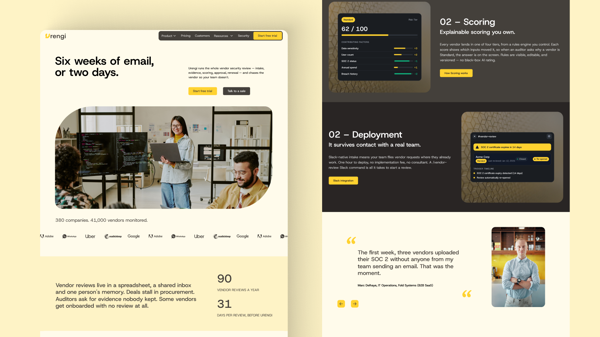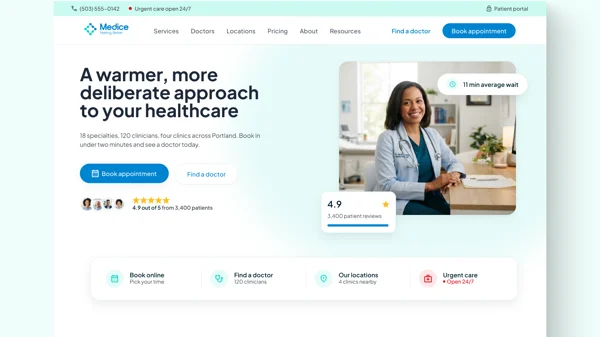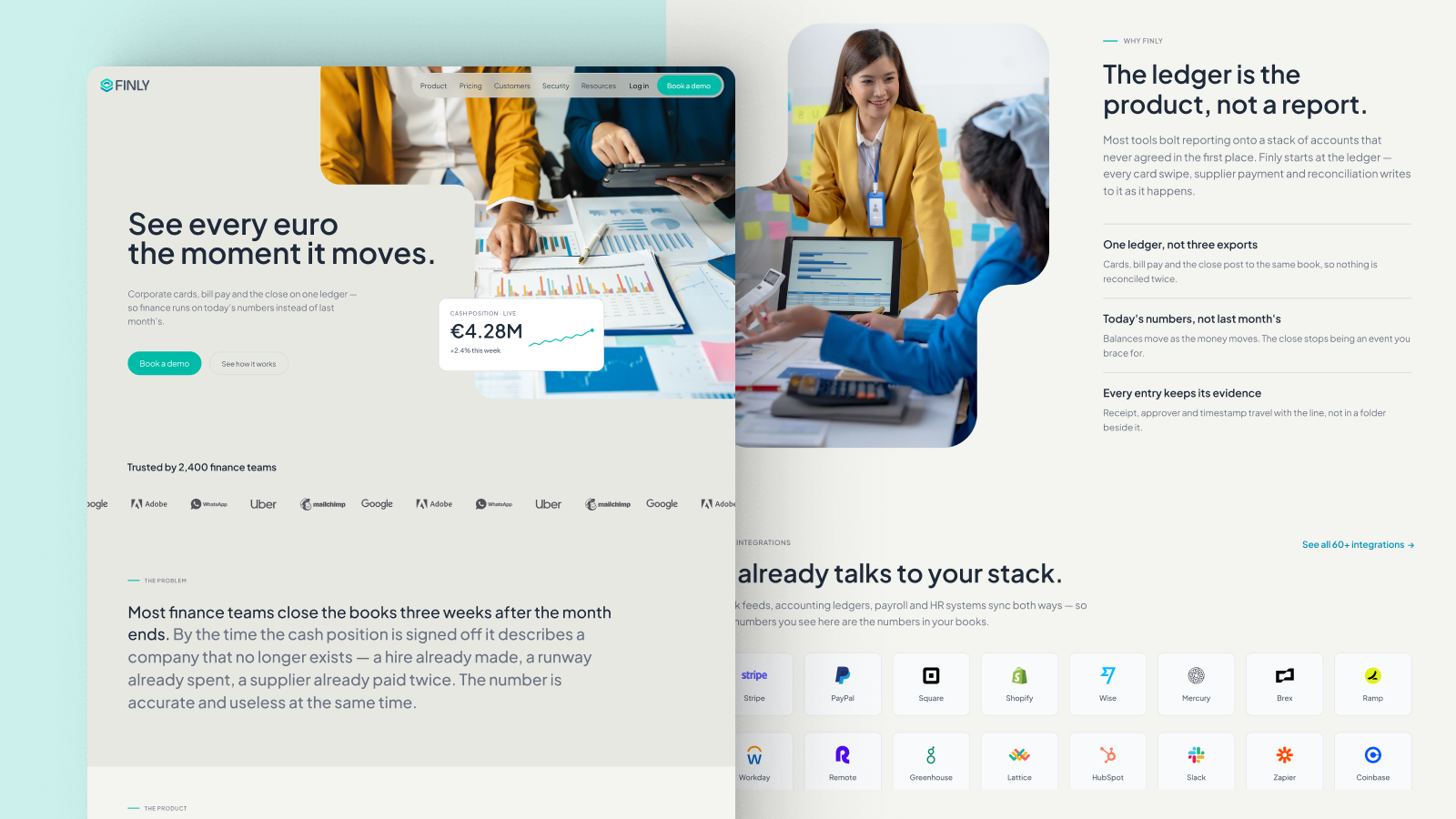

Finly is built for products that have to look trustworthy before anyone reads a word. It ships as a whole company site rather than a landing page: a home page of alternating product bands, a product page with a workflow rail and a comparison table, a sixty-vendor integrations directory, tiered pricing with a monthly/annual toggle and a full feature matrix, ten customer stories with filters and an aggregate results band, a thirteen-post blog with author and category archives, nine job adverts, an about page with team, timeline and press, three account screens, and a connected contact form. It pairs a cool blue-slate ink and a teal accent with warm greige surfaces in light mode, deep slate in dark mode, Plus Jakarta Sans throughout, and static Astro output with almost no JavaScript.
It is ideal for fintech and payments products, B2B SaaS companies, accounting and finance tools, banking and treasury platforms, expense and spend management products, developer and infrastructure tools, data and analytics platforms, HR and payroll software, insurance and lending products, agency-built product sites, and startup teams that want a fast, accessible, production-shaped Astro site without assembling one from a page builder.
Features
- 25 routes building to 123 static pages, with a build plugin that fails the build if any link points at a page the build did not produce
- Home page composed of stacked bands: hero, logo marquee, problem statement, product surfaces, a three-row feature alternator with app screenshots, integrations teaser, customer stories, video stories, pricing preview, onboarding band, FAQ and closing CTA
- Product page with a workflow rail, how-it-works steps, ledger cards, a statement band, testimonial and a comparison table
- Integrations directory of 60 vendors across accounting, ERP, banking, HRIS and SSO, with a category filter bar and a detail page per integration covering sync direction, requirements and related tools
- Pricing page with plan tiers, a monthly/annual billing toggle, an animated seat-math card, a full feature matrix, add-ons and an enterprise band
- Customer stories as a content collection: filterable grid by industry and company size, a featured story, per-story facts rail, three-metric band, product shot, logo wall and related stories
- Blog powered by Astro content collections with featured post, category and author archives, paginated index, reading time, share and copy-link chips, author bio cards and related posts
- Careers section with an open-roles list, benefits grid, hiring process, life strip and a full job advert page with a contents rail
- About page with origin story, values grid, milestone timeline with animated figures, team section, offices, investors and press
- Login, signup and forgot-password screens with SSO buttons, a proof panel and step indicators
- Contact page with routed enquiry cards and a working form: per-field and form-level validation, honeypot and timestamp checks, sent state, and Resend delivery through an Astro action on Cloudflare
- 61 in-house UI primitives built to a written five-rule contract, native-first on `<dialog>`, the Popover API, `<details>` and `@starting-style`, so most ship zero JavaScript
- Typed `<Icon name="…" />` over a generated 571-entry registry, inlined at build with no external icon requests
- Owned motion layer of roughly 87 `animate-*` utilities plus scroll-driven reveals, split text, sentence reveals and count-ups, with a global `prefers-reduced-motion` guard and a site-wide off switch
- SEO handled natively: canonical URLs, Open Graph, Twitter/X cards, hreflang, sitemap, `robots.txt`, `llms.txt`, RSS, and JSON-LD builders emitting Organization, WebSite, Article, JobPosting, BreadcrumbList and case-study graphs, with no SEO package
- Collapsing header with a mega menu, an off-canvas mobile sheet and a theme toggle with saved reader preference
- Light and dark modes driven by Tailwind CSS 4 CSS-first tokens — palette aliases to semantic runtime variables — so a rebrand is one edit per colour ramp
- `pnpm test` asserts all 45 semantic colour pairs clear WCAG AA in both themes
- Three Zod-validated content collections (blog, authors, customers) with per-locale ids and a locale seam left in place
- All page copy in typed config files, one per page, so no strings are hard-coded in components
- TypeScript strict throughout, ESLint and Prettier configured, and a self-check runner that discovers tests dropped anywhere in the tree
- Video stories with local poster frames and YouTube embeds loaded only on play
- Responsive Astro images, self-hosted variable font, view transitions, accessible skip link, semantic landmarks, labelled controls and keyboard-operable dialogs
- Static output everywhere except the one contact route, with no client framework runtime and no runtime dependency beyond `tailwind-variants`
Best Used For
- Fintech and payments products
- B2B SaaS marketing sites
- Accounting, close and bookkeeping software
- Corporate card and spend management tools
- Banking, treasury and lending platforms
- Expense, invoicing and bill-pay products
- Developer tools and API platforms
- Data, analytics and BI products
- HR, payroll and workforce software
- Insurance and compliance technology
- Vertical SaaS for specific industries
- Startup and seed-stage company sites
- Agency-built client product sites
- Enterprise software product pages
- Companies that need customer stories, careers and a blog in one site
- Teams that need strong SEO, accessible design and fast static performance